
Samsung Galaxy Z Fold 8 Review: Wider Design Delivers A Better Foldable Experience
The display remains a strong point for gaming as well, especially when titles support dynamic resolutions in landscape orientation.
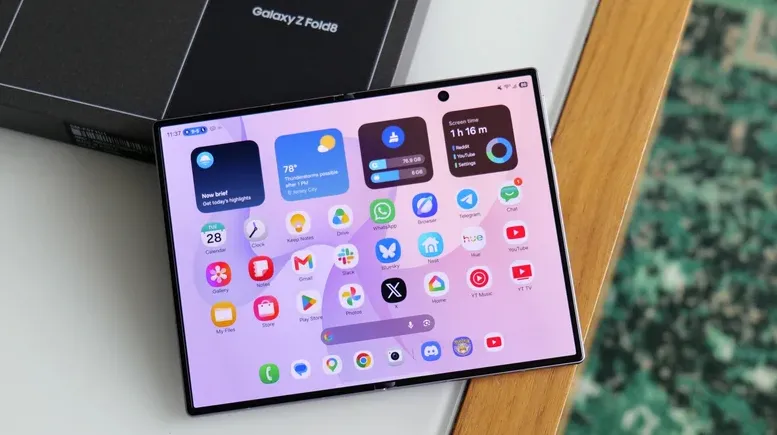
Samsung has reshaped its flagship foldable lineup with the launch of the Galaxy Z Fold 8 series, introducing both the premium Galaxy Z Fold 8 Ultra and the standard Galaxy Z Fold 8. While the Ultra sits at the top of the range, the more affordable model stands out by offering a refined balance between smartphone portability and tablet-like usability.
The biggest redesign comes in the phone's proportions. Samsung has opted for a shorter and noticeably wider chassis, moving away from the narrow foldable design seen in previous generations. The result is a device that feels more comfortable to use when closed while also providing a more spacious experience once unfolded.
That wider footprint benefits both the exterior and interior displays, making everyday tasks like messaging, navigation, media consumption, and gaming more enjoyable without dramatically increasing the device's overall size.
Samsung Galaxy Z Fold 8's Wider Displays Improve Everyday Use
Samsung equips the Galaxy Z Fold 8 with a 5.5-inch AMOLED cover display featuring a 10:16 aspect ratio. The wider panel makes typing, reading messages, and checking maps feel more natural compared to previous Fold models with narrower screens.

Opening the device reveals a 7.6-inch AMOLED inner display with a 4:3 aspect ratio. The revised layout reduces letterboxing when viewing widescreen content while also providing slightly more usable viewing space for traditional 16:9 videos. Older content designed for 4:3 displays also benefits from the screen's proportions.
The display remains a strong point for gaming as well, especially when titles support dynamic resolutions in landscape orientation. Users who prioritize multitasking may still prefer the larger Galaxy Z Fold 8 Ultra, whose 8-inch display offers more vertical space for running multiple apps simultaneously.
YOU MAY ALSO LIKE: XGIMI Elfin Flip 4K Review: Portable 4K Laser Projector Delivers Impressive Picture Quality At An Affordable Price
Samsung has also upgraded both displays with a peak brightness of 3,000 nits and introduced a new anti-glare coating that reduces reflections without noticeably affecting image quality. The coating also makes opening the device easier, while the fold crease is less visible than on the previous generation.
One trade-off accompanies the redesigned hinge. Samsung has corrected the previous model's tendency to stop short of fully opening, allowing the Galaxy Z Fold 8 to unfold completely. However, the device no longer stays positioned at a 90-degree angle for tabletop mode. Instead, users can place it in a tent configuration by flipping it over.
Performance, Cameras, Battery Life, And Charging Get Meaningful Upgrades
Samsung continues its premium construction with titanium reinforcement beneath the flexible display, an Armor Aluminum frame, and Gorilla Glass Victus 2 and Victus 3 protection. The phone also includes a side-mounted fingerprint scanner and carries an IP48 rating for dust and water resistance.
Powering both the Galaxy Z Fold 8 and Galaxy Z Fold 8 Ultra is Qualcomm's Snapdragon 8 Elite Gen 5 for Galaxy processor, paired with up to 16GB of RAM and as much as 1TB of storage. Performance remains consistent across both models, handling multitasking, gaming, and mobile video editing with ease.

The main hardware difference between the two devices lies in the camera system. The standard Galaxy Z Fold 8 includes a 50-megapixel primary camera alongside a 50MP ultra-wide sensor but omits the dedicated telephoto camera found on the Ultra.
While zoom photography is more limited, the phone still produces detailed portraits and vibrant daytime images. Google's Pixel smartphones retain a slight advantage in very low-light photography, though Samsung's foldable remains competitive overall.
Battery life also remains solid despite the Galaxy Z Fold 8 carrying a slightly smaller 4,800mAh battery compared to the Ultra's 5,000mAh pack. During local video rundown testing, the phone lasted 28 hours and 14 minutes using the exterior display, providing enough endurance for a full day of demanding use.
Samsung has also increased charging speeds for both foldables. Wired charging now reaches 45W, up from 25W on the previous generation, while wireless charging has improved from 15W to 20W. Users who rely on magnetic charging accessories will still need a compatible case or external adapter, as Samsung has not integrated a magnetic ring into the device.
Related Articles

Xiaomi 18 Fold Debuts At IFA 2026 With XRing O3 Chip And Wider Design

Apple iPhone Duo Brings Foldable Design, 7.6-Inch Display And Apple Pencil Support

Meta Ray-Ban Display Smart Glasses Can Automatically Disable The Screen While Driving

Digital Wallets Like Apple Wallet And Google Wallet Can Be Safer Than Carrying Physical Cards

Capcom Plans More Franchise Revivals After Onimusha: Way Of The Sword Sells 1 Million Copies

iOS 27 Adds Apple Cash Bill Splitting With Visual Intelligence — Here’s How It Works
Join the Conversation
Sign in or join the community to share your opinion, engage with authors, and interact with other readers.
Checking reader session…
0 Comments
Loading comments…
Take a Break
Flex your brain with our daily mini-game